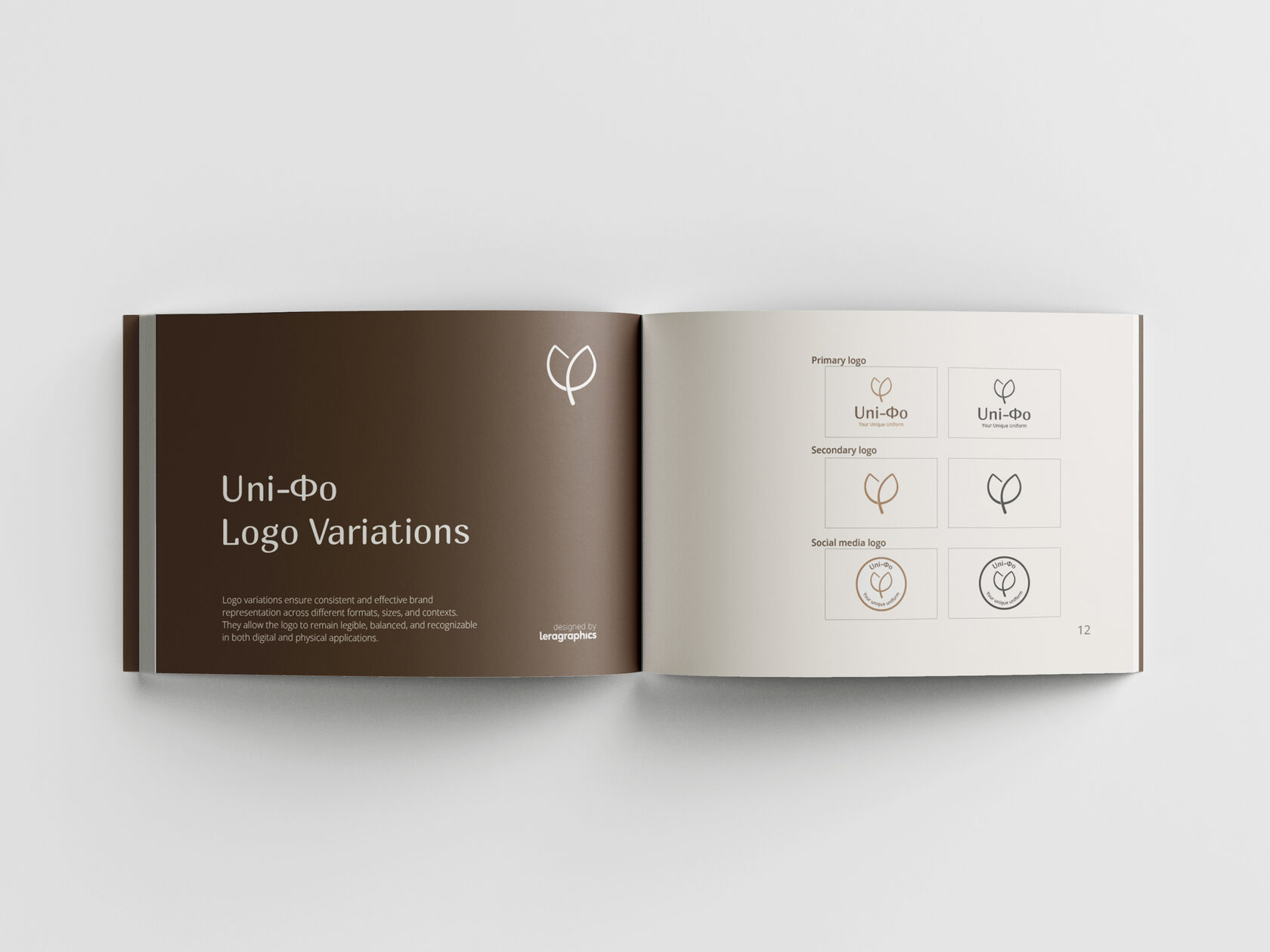
How It Differs from a Brand Book, and Why the Difference Matters
As a brand grows, clarity becomes more difficult to maintain.
What begins as a single logo quickly expands into presentations, websites, social media, printed materials, and internal documents. With every new touchpoint, the risk of inconsistency increases. This is usually the moment when companies start looking for structure.
Two terms appear most often in this context: logo book and brand book.
They are frequently confused or used interchangeably, yet they solve very different problems. Understanding this difference helps businesses make informed decisions and avoid unnecessary complexity or, just as often, underestimating their real needs.
What a Logo Book Actually Is
A logo book is a focused document dedicated exclusively to the logo and its correct usage. Its purpose is simple but essential: to protect the logo from misuse, distortion, and inconsistency.
A well-prepared logo book explains how the logo should appear in different situations. It defines proportions, spacing, color variations, background usage, and unacceptable applications. In short, it answers one fundamental question: how can the logo remain recognizable and intact no matter where it appears?
A logo book does not attempt to define the entire brand. It is a protective layer around the most visible and sensitive element of visual identity. For many businesses at an early stage, this level of documentation already brings a noticeable sense of order.
What a Brand Book Covers
A brand book works on a broader level.
It does not focus on a single element but instead defines the logic of the entire visual system.
Beyond logo rules, a brand book explains how colors work together, how typography behaves in different contexts, how layouts are structured, and how visual rhythm is maintained across channels. It establishes not just rules, but reasoning. It shows how decisions connect and why certain solutions exist.
While a logo book protects recognition, a brand book protects coherence. It ensures that different people, teams, and partners interpret the brand in the same way over time.
The Core Difference
The difference between a logo book and a brand book is not about quality or importance. It is about scope and intention.
A logo book focuses on precision.
A brand book focuses on consistency.
A logo book is often sufficient when the main risk lies in incorrect logo usage. A brand book becomes necessary when inconsistency starts appearing in tone, layouts, typography, and overall visual behavior. At that point, the issue is no longer about a single asset, but about how the brand presents itself as a whole.
When a Logo Book Is Enough
A logo book is often a practical solution for:
- early-stage brands
- small teams with limited communication channels
- companies working with one designer or a stable internal team
- businesses that need protection rather than expansion
In these cases, a logo book creates clarity without unnecessary complexity. It allows the brand to stay visually disciplined while remaining flexible.
When a Brand Book Becomes Necessary
As a brand evolves, its needs change.
A brand book becomes essential when:
- multiple people start working with the brand
- external partners are involved
- the brand communicates across many platforms
- consistency begins to affect trust and perception
At this stage, logo rules alone are no longer enough. Without shared principles, visual decisions become subjective. Over time, this leads to fragmentation, rework, and a loss of identity.
What Happens Without Clear Documentation
When brands operate without clear guidelines, they often rely on individual interpretation. Each new designer, marketer, or partner brings their own understanding of what feels right. Initially, this may not seem problematic. Over time, however, small inconsistencies accumulate.
Colors shift slightly. Typography changes. Layouts lose rhythm. The brand still exists, but it no longer feels stable or intentional. This is rarely noticed immediately, yet it strongly affects how the brand is perceived.
Clear documentation prevents this slow erosion. It replaces personal taste with shared understanding.
Choosing the Right Level of Structure
The goal of brand documentation is not to create large files or impressive presentations. The goal is clarity. A logo book and a brand book are simply different tools designed to solve different problems.
What matters is choosing a format that reflects the brand’s current reality, not its ambitions or assumptions. Too little structure creates chaos. Too much structure creates friction. The right balance supports growth without restricting it.
Clarity as a Long-Term Asset
Good documentation does not draw attention to itself.
It works quietly in the background, making everyday decisions easier and reducing friction between people and teams. When done well, it allows the brand to evolve while remaining recognizable.
In the end, both a logo book and a brand book serve the same purpose. They protect clarity. The difference lies in how much clarity the brand currently needs.